
A first hello to French. A playful beginning.
For toddlers and preschoolers, language learning should feel joyful, safe and age-appropriate. Little Francophones introduces French through songs, stories, movement, pictures and familiar routines—not formal grammar lessons or pressure to perform.
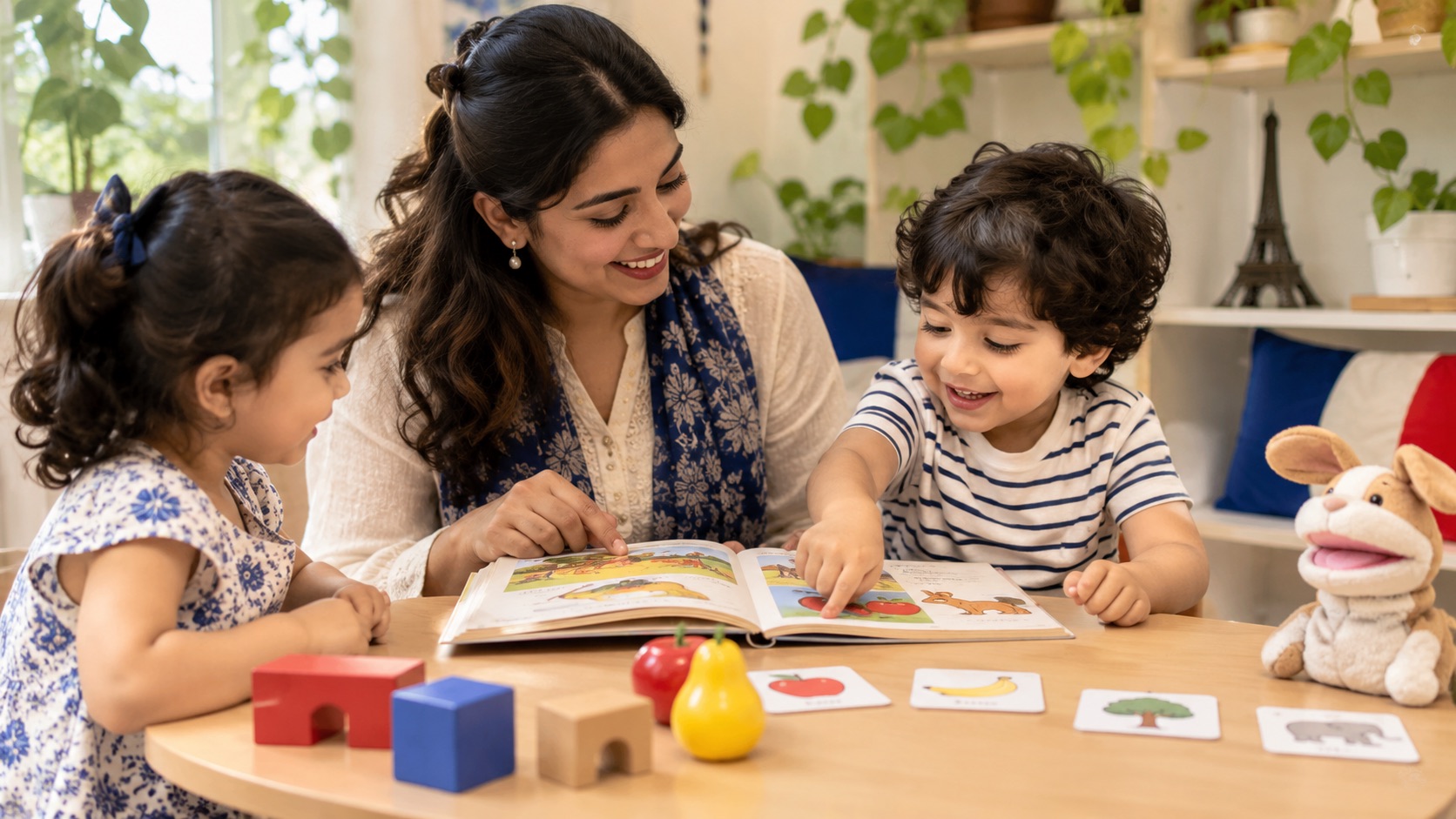
A glimpse of play-based French discovery: stories, songs, objects and shared interaction.
Our philosophy for early learners
At ages 2–5, children are exploring sounds, routines, relationships and the world around them. Our sessions use repetition, rhythm, gestures and visual cues to make French familiar. Children are invited to join in at their own pace; listening and observing are meaningful forms of participation too.
Stories, songs, puppets, movement and hands-on activities introduce language naturally.
Familiar words and phrases return across activities so children can recognise and gradually use them.
We encourage curiosity and participation without expecting children to speak on demand.
What a session may include
- A familiar hello song and gentle settling-in routine.
- A picture book, puppet or themed story.
- Movement games with simple instructions.
- Vocabulary through pictures, objects and repetition.
- A short creative activity, rhyme or goodbye routine.
Typical themes
Greetings · Colours · Numbers · Animals · Family · Food · Body parts · Toys · Weather · Everyday objects
Session length
As a planning guide: around 30–40 minutes for ages 2–3 and 40–45 minutes for ages 4–5, adjusted to the group’s needs and attention.
What progress can parents expect?
Progress at this age is gradual and individual. A child may first listen, then recognise a repeated word, respond with a gesture, join a song, or eventually use a familiar expression. We look for growing comfort, recognition and participation—not memorised grammar or written tests.
How we share progress
- Brief observations about participation and familiar words recognised.
- Suggestions for simple songs, picture books or phrases to revisit at home.
- Age-appropriate feedback rather than formal marks or examinations.
How parents can help
Keep it light. Revisit a song, name a colour together or enjoy a French picture book for a few minutes. There is no need to turn home time into a test or insist that your child repeat words.
Clear expectations
This is an introductory language-exposure programme, not a promise of fluency or a formal CEFR course. Younger children may need a parent or caregiver nearby, especially in online sessions. Activities and group format are confirmed before enrolment.
Let’s find the right French class.
Tell us about the learner, their experience and what they hope to achieve.
Enquire about classes →